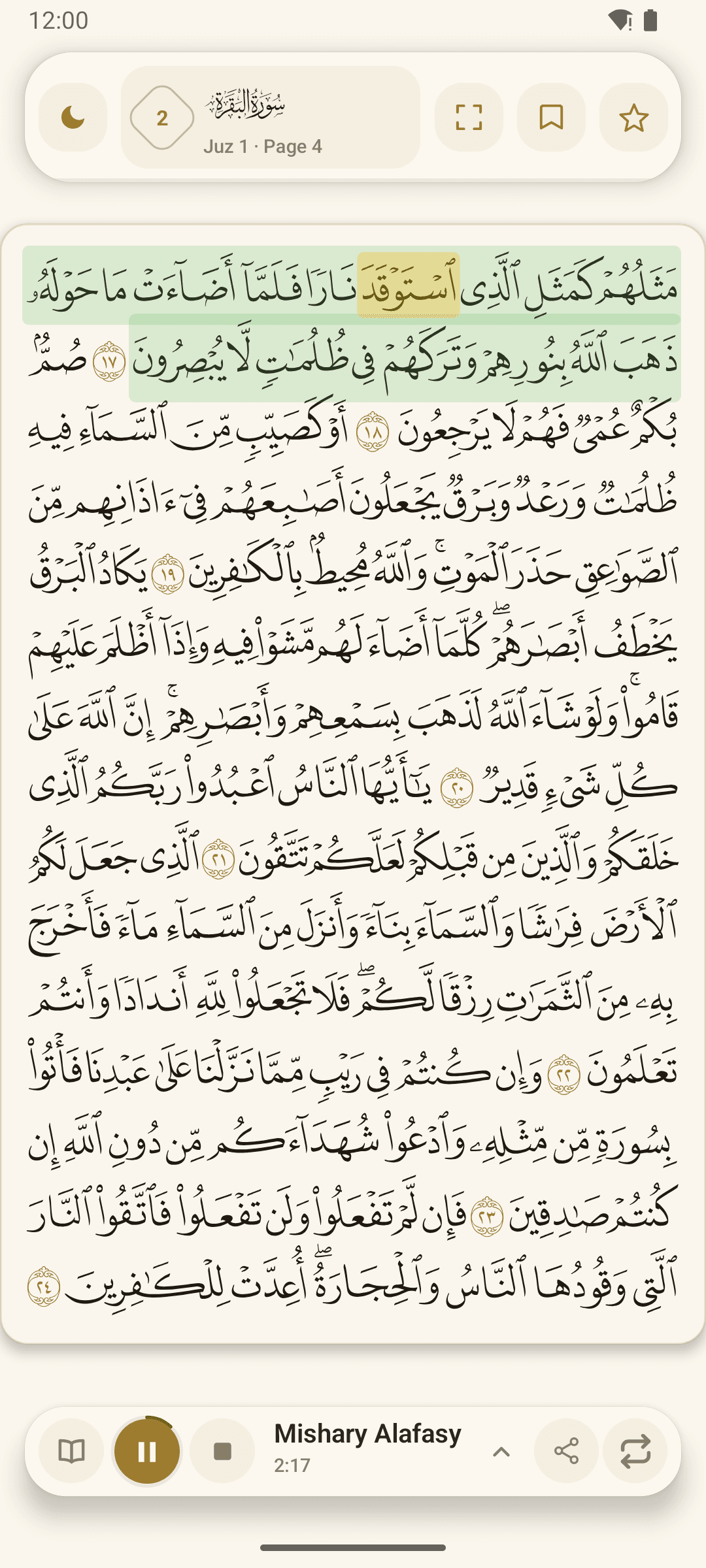
Repeat controls can remove the interruption of finding and restarting the same passage. The tool works best when it supports a clear memorisation routine: listen carefully, read with attention, recall without looking and return for correction.
Begin with a manageable passage
Choose one Ayah or a short connected passage. Read it carefully before starting repetition, and make sure you know where the selected range begins and ends. Smaller portions make it easier to notice the words or transitions that still need attention.
Choose an available reciter whose pace and clarity support your practice. Keep the Arabic text visible during the first repetitions so you can connect the sound with the words on the page.
Move from listening to active recall
Listening many times can build familiarity, but memorisation also needs active recall. After several repetitions, pause the audio and recite the passage without looking. Then return to the text and playback to check what you missed.
If one part remains difficult, shorten the repeated range instead of repeatedly playing a long passage. Join the smaller parts again only after each transition feels stable.
Plan revision as well as new memorisation
Use bookmarks to keep new work and revision passages easy to find. A simple session can include a new passage, a recently memorised passage and an older section that needs maintenance.
Quran Mushaf provides supported word highlighting and repeat controls to assist practice. These tools do not assess pronunciation, so regular recitation to a qualified teacher remains valuable for correction and guidance.