How to pray, step by step.
Clear guides for every prayer, from wudu to the salam: what to do in each position, what to recite in Arabic with transliteration and meaning, and where the Hanafi and Shafi'i schools differ.
Scholarly review: In review by scholars of the Hanafi and Shafi'i schools. This guide uses the same text as the Quran Mushaf app. Where the Hanafi and Shafi'i schools differ, both are shown. If you spot a mistake, please tell us.
The guides
Looking for a specific prayer? Fajr, Dhuhr, Asr, Maghrib, Isha, Tahajjud and Taraweeh
Before you pray
Wudu, cleanliness and intention
Guide 2Two rakats, step by step
Every position and what to recite — like Fajr
Guide 3Three and four rakats
Dhuhr, Asr, Maghrib and Isha
Guide 4Witr and qunut
The night's last prayer
Guide 5Jumu'ah
The Friday prayer
Guide 6Eid prayer
Eid al-Fitr and Eid al-Adha
Guide 7Janazah prayer
The funeral prayer: four takbirs, standing
Guide 8Sunnah and nafl prayers
Tahajjud, Duha, Istikhara, Taraweeh and more
Guide 9Travel, mistakes and making up
Qasr, sajdah sahw, sajdah tilawah, qada
How many rakats are in each prayer?
The fard (obligatory) rakats, with the emphasised sunnah (sunnah mu'akkadah) prayers around them. Both schools also recommend further, non-emphasised sunnah prayers, such as four before Asr.
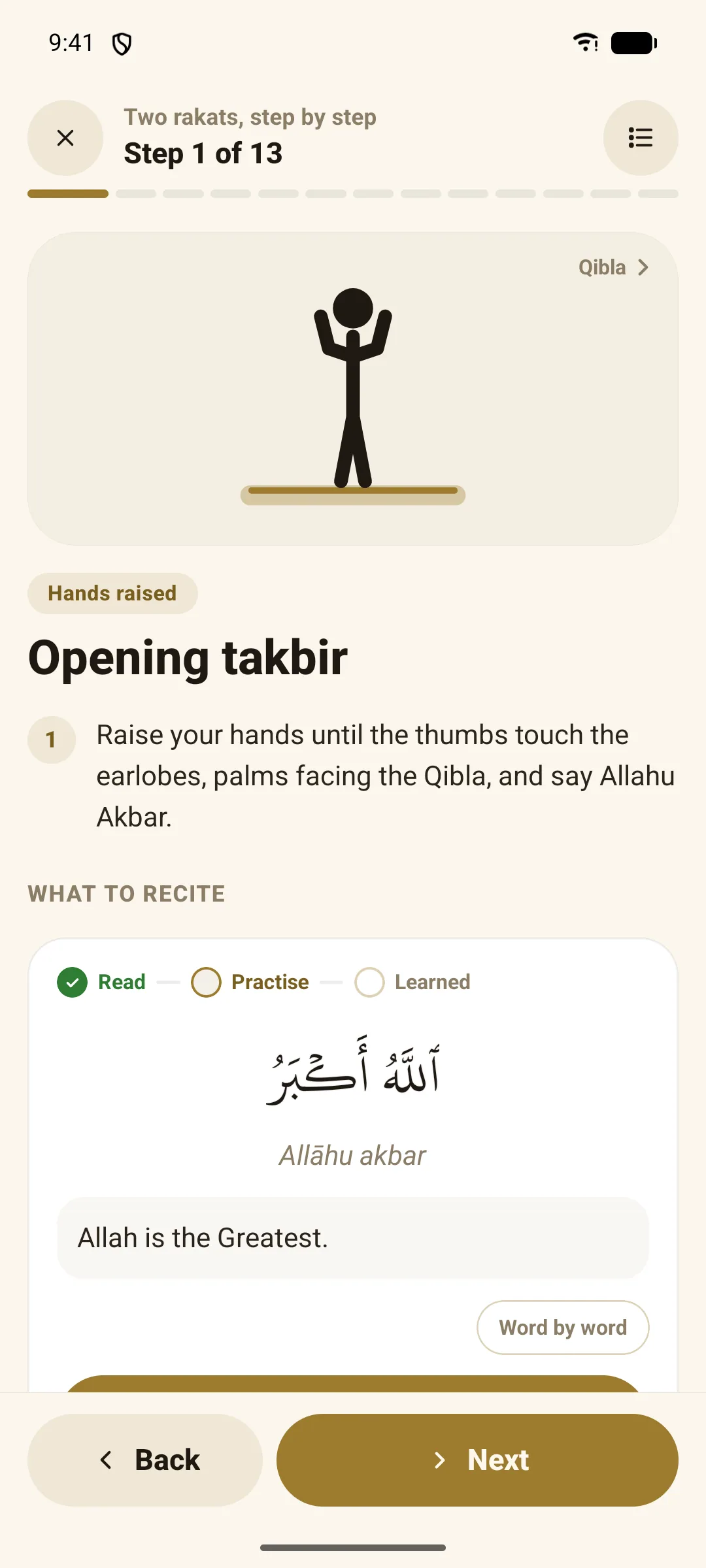
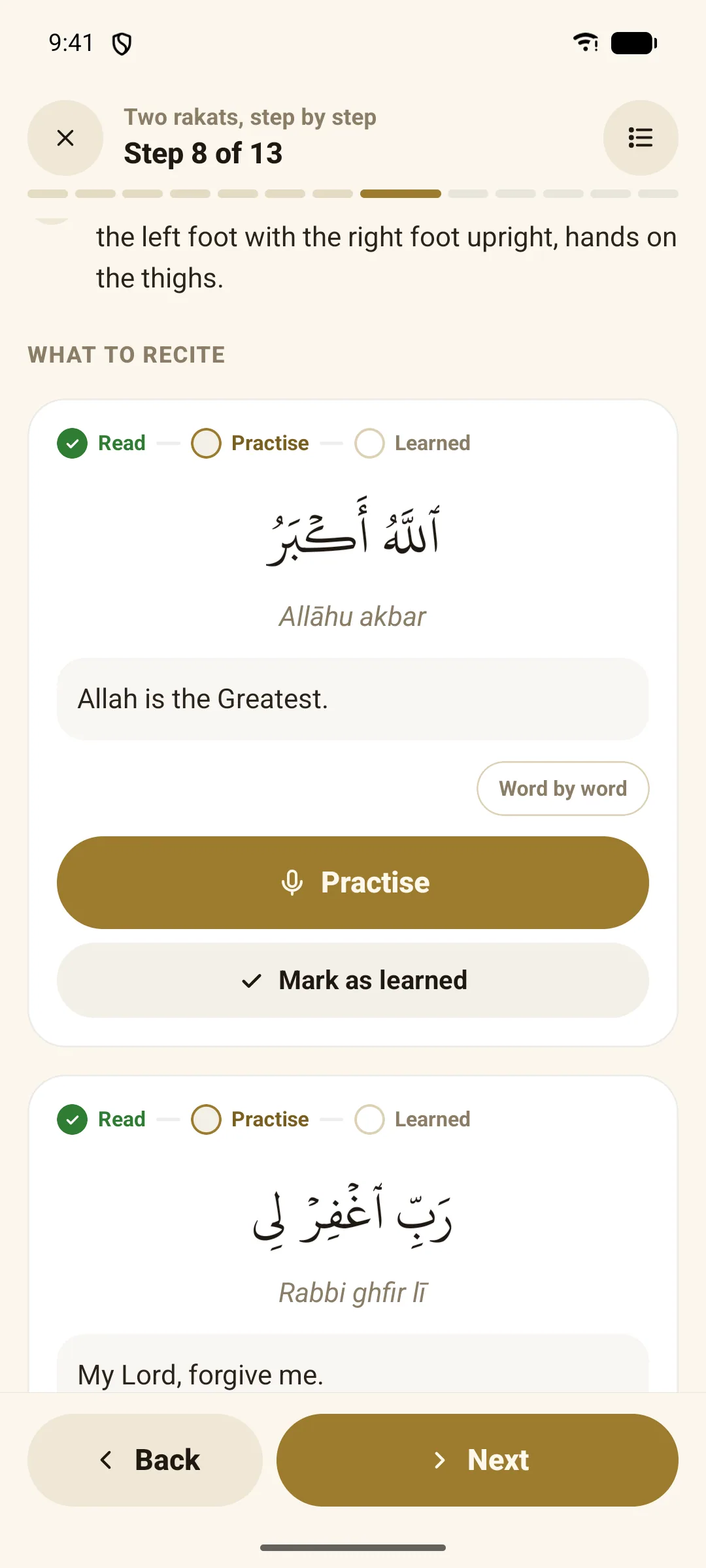
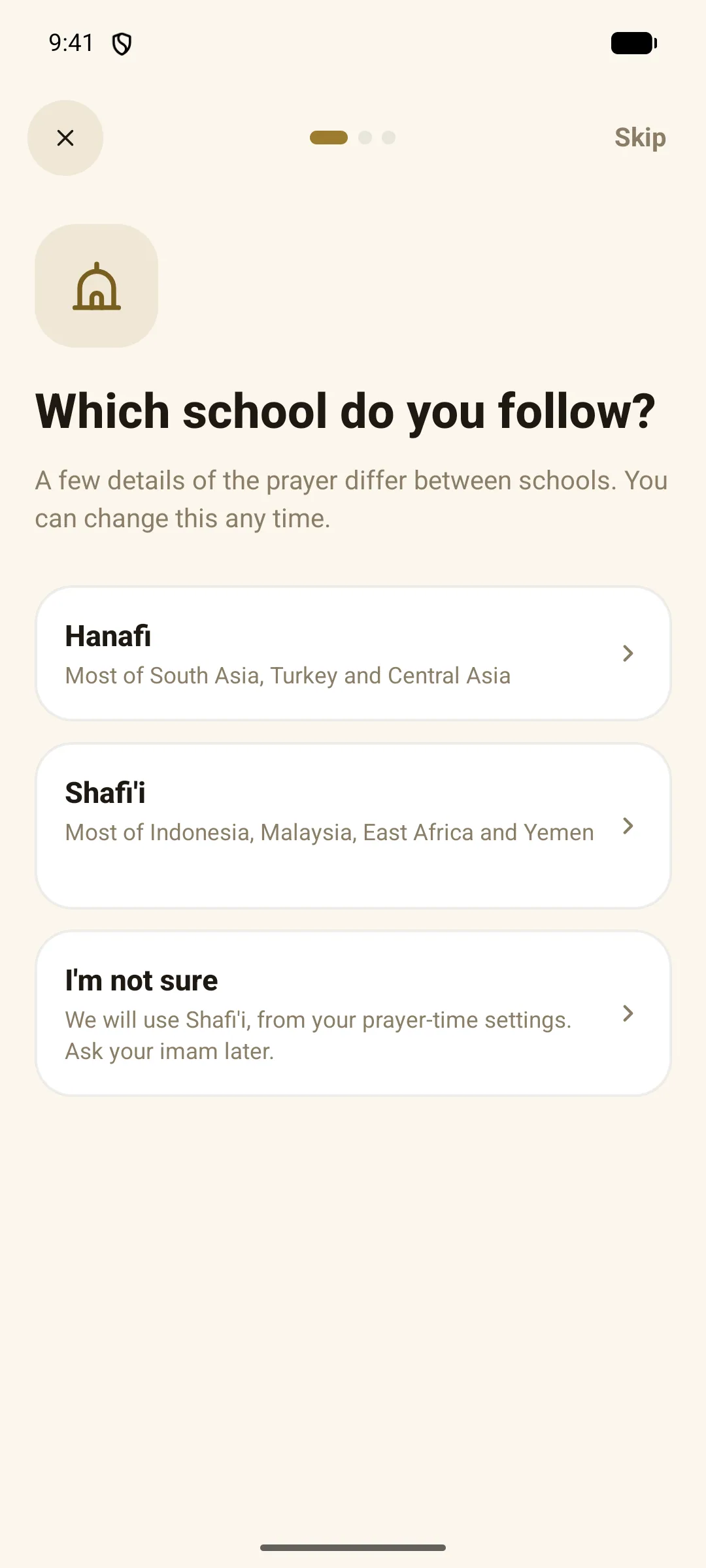
Learn Namaz in Quran Mushaf Coming soon
These lessons are coming to the Quran Mushaf app with posture figures, audio for every recitation and an on-phone voice check that helps you say each du'a correctly. Prayer times, the Qibla compass, the azan and a private namaz tracker are already in the app.
About Learn Namaz in the app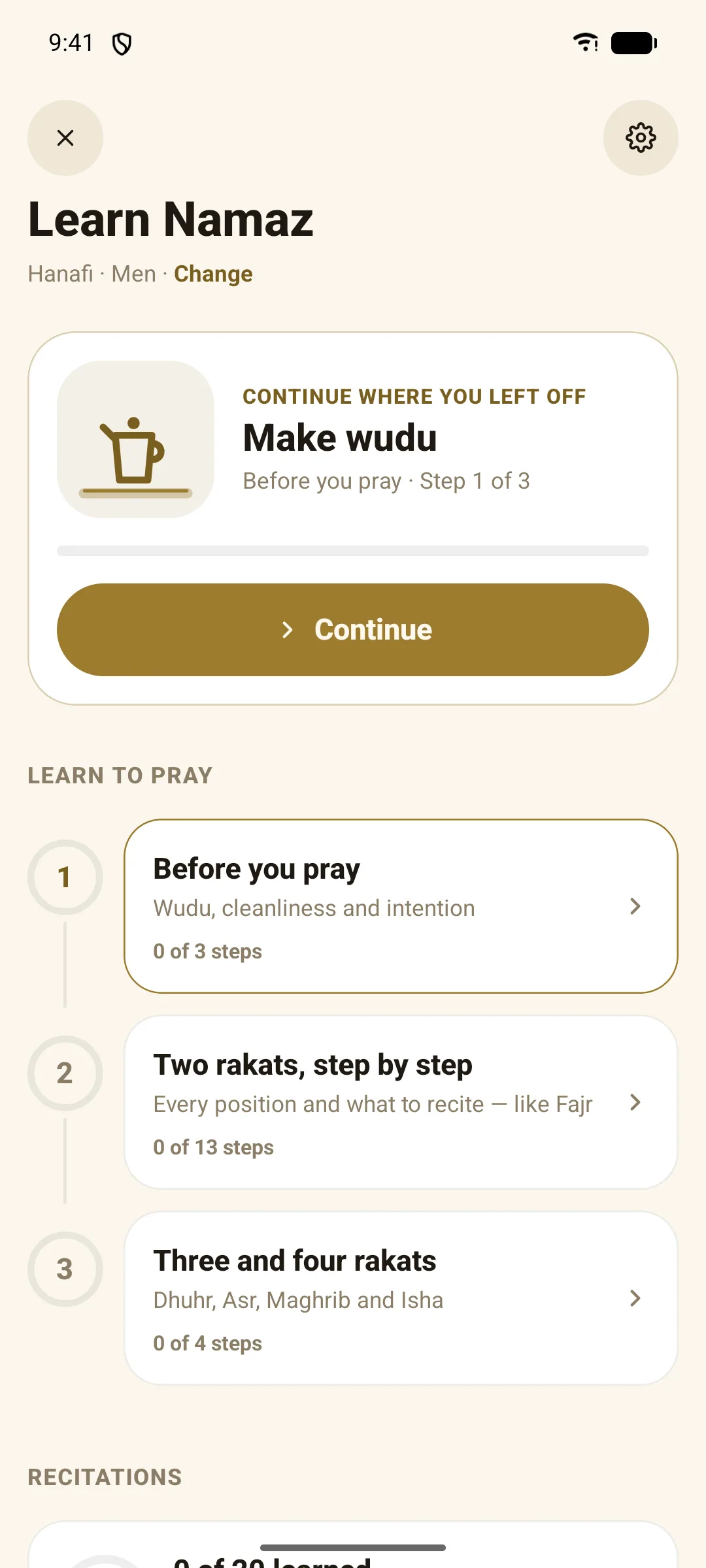
Common questions about the prayer
How many rakats are in the five daily prayers?
The fard rakats are Fajr 2, Dhuhr 4, Asr 4, Maghrib 3 and Isha 4: seventeen in all. The sunnah prayers before and after are in the table on this page.
What is the difference between the Hanafi and Shafi'i prayer?
The structure is the same. They differ in details such as where the hands are placed, whether the hands are raised before and after ruku, the opening du'a, saying Ameen aloud, and the sitting in the last rakat. Each guide marks these differences.
Is the prayer different for women?
In the Hanafi school a few postures differ, such as hand position and a more compact ruku and sujud. These are marked Women in each step.
I am a beginner and do not know the Arabic yet. Can I still pray?
Yes. Start praying while you learn: learn Al-Fatiha and a short surah first, and use the transliteration on these pages. Ask someone at your local masjid to listen to you.
Prayer times, Qibla and azan, in your Quran app.
Quran Mushaf calculates prayer times on your phone, points you to the Qibla and plays the azan from Makkah. Free, with no ads and no account.